
sales@screwjackfactory.com, screwjackfactory@gmail.com +86-137-1229-1184
English

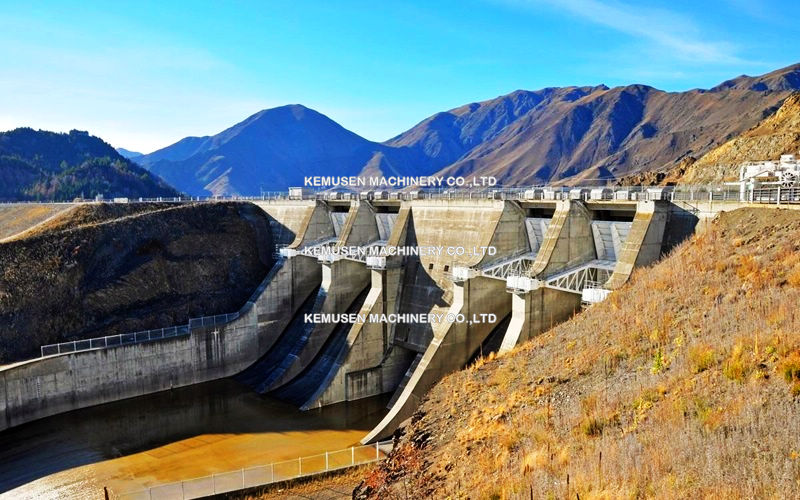
Screw jacks are widely used for the opening and closing of penstocks, also known as sluice gates, in various applications like water treatment facilities and hydropower stations.
* Mechanism: Screw jacks utilize a worm gear system to convert rotational motion (from a handwheel or motor) into linear motion, which raises or lowers the penstock gate.
* High Load Capacity: Screw jacks are designed to handle the heavy weight of penstock gates and the pressure exerted by water.
* Self-Locking: Many screw jacks, especially machine screw jacks with Acme threads, have self-locking capabilities, meaning they can hold the gate in position without requiring * continuous power, ensuring safety and stability.
* Precision: Screw jacks provide precise control over the gate's position, crucial for regulating water flow.
* Reliability: With relatively few moving parts compared to other systems, screw jacks are known for their durability and low maintenance needs.
* Versatility: They can be used as single units or in multi-jack systems to accommodate different gate sizes and weights.
* Manual or Motorized Operation: Screw jacks can be operated manually with a handwheel or motorized for automated control, offering flexibility depending on the application and needs.
* Gate Size and Weight: The screw jack's load capacity must be sufficient to lift and hold the penstock gate.
* Water Pressure and Impact Force: Consider the forces exerted by water on the gate, especially in applications with high pressure.
* Lifting Height and Speed: Determine the required travel distance and speed for opening and closing the gate.
* Duty Cycle: For high-duty cycle applications, ball screw jacks may be a better option due to their increased efficiency.
* Environmental Conditions: Consider the temperature and potential for corrosion or other environmental stresses.
* Configuration: Screw jacks can be configured as single or multiple units, and with different end attachments (like top plate or clevis end) to suit the application.
* Slower Speed: Compared to hydraulic systems, screw jacks may operate at slower speeds, which might not be ideal for applications requiring rapid gate movement.
* Maintenance: While generally low-maintenance, screw jacks still require regular lubrication and inspection to ensure optimal performance.


